How Dr. Chris Stout is Helping Founders, Executives, and Humanitarian Leaders Build Ventures That Matter
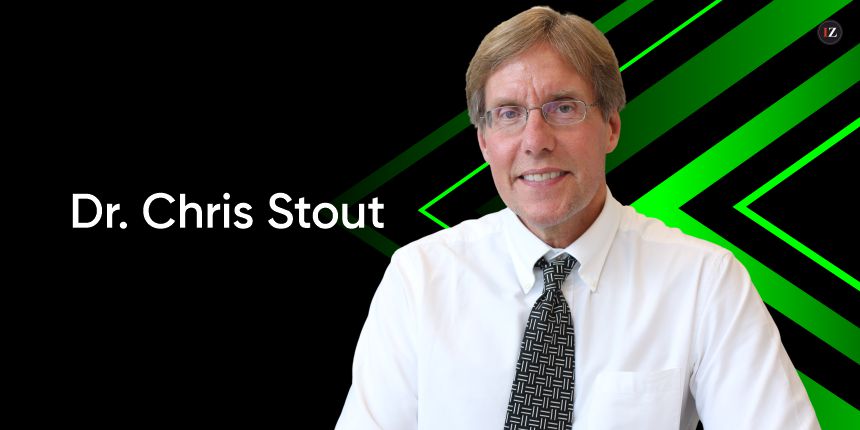
In every era, a small group of leaders expands the field of what progress can look like. They do not simply manage institutions, fund companies, or deliver polished speeches from prominent stages. They connect disciplines that rarely speak to one another. They see the founder behind the pitch deck, the patient behind the dataset, the community behind the intervention, and the long-term possibility inside a fragile early idea. In 2026, among the human potential pioneers inspiring change and innovation, Dr. Chris Stout stands out because his influence is not limited to one title, sector, or platform. It comes from a career spent crossing boundaries with purpose.
Stout is often described in hybrid terms: clinical psychologist, bestselling author, humanitarian, startup advisor, angel investor, LinkedIn Top Voice, global health advocate, adventurer, and “Startup Whisperer.” The labels are useful, but incomplete. His work is better understood as a sustained experiment in applied human potential: how people, organizations, and ideas grow stronger when they are challenged rigorously, supported generously, and connected to a mission larger than themselves.
A Business Leader Built Across Disciplines
What makes Stout distinctive as a business leader is the breadth of arenas in which he has operated. His career spans business, government, academia, nonprofit leadership, media, psychology, global health, and startup advising. He works as an angel investor and advisor to startups in healthcare, technology, sciences, and medicine, often serving in nonexecutive director roles. He also consults with C-suite leaders and boards on growth and strategy, while donating his fees to the global health nonprofit he founded.
That structure reveals a great deal about his worldview. For Dr. Stout, leadership is not extraction; it is circulation. Expertise should move outward. Networks should open doors. Capital, credibility, and strategy should accelerate valuable ideas, especially when those ideas serve health, science, medicine, or social impact. In a startup culture too often defined by speed without reflection, Dr. Stout brings a rare combination of urgency and ethics.
His executive experience has included large-scale healthcare leadership. As Vice President and Founding Director of the Department of Clinical Research and Data Analytics at ATI, he worked at the intersection of outcomes, data, and healthcare operations. That was not abstract thought leadership. It was operational responsibility at a scale where information, systems, and human care had to align.
The Thesis: Purpose Can Scale
At the center of Dr. Stout’s work is a deceptively powerful idea: purpose can scale when it is designed with discipline. Through the Center for Global Initiatives, the global health nonprofit he founded, Dr. Stout has advanced a model of “open-sourcing” humanitarian intervention. The organization’s mission emphasizes self-sustaining programs that improve access to healthcare in underserved communities, with services, tools, materials, and consultations offered free of charge.
This philosophy has practical consequences. Rather than positioning impact as charity alone, Dr. Stout treats it as design. If humanitarian work can be made more accessible, repeatable, and evidence-informed, then the barriers between good intentions and durable results begin to fall. His global health projects have included work connected to education, rural communities, healthcare access, and international collaboration, including the establishment of a kindergarten for an orphanage in Tanzania with approval from the Tanzanian Ministry of Education.
The same sensibility informs his work with founders. Dr. Stout does not romanticize entrepreneurship. He sees the beauty of early-stage invention, but he also understands how easily dreams can become expensive errors when founders lack honest evaluation, strategic networks, operational discipline, or the courage to pivot. His advisory approach is built around first-principles thinking, viability analysis, ethical challenge, and strategic connection.
The Startup Whisperer
The phrase “Startup Whisperer” can sound playful, but in Dr. Stout’s case it captures a serious leadership skill: the ability to hear what a founder is trying to build before the world understands why it matters. His advisory work is unusually practical. His team’s stated capabilities span recruiting, sales, legal, accounting, human resources, marketing, C-suite development, intellectual property, technology, coding, artificial intelligence, machine learning, and investor introductions. In other words, founders gain access not just to advice, but to an interdisciplinary operating system.
What distinguishes the model is its balance. Dr. Stout’s approach is to believe in the concept early-on while still asking hard questions. He offers encouragement without illusion, network access without empty signaling, and strategic feedback without turning complexity into theater. That balance—supportive but unsentimental—is precisely what early-stage leaders need when they are trying to build something that does not yet have broad validation.
Startup founders often operate in loneliness. They must raise money, recruit talent, define markets, protect intellectual property, build products, earn trust, and survive rejection. They need investors, but they also need translators: people who can move between science and capital, medicine and technology, behavioral insight and organizational design. Dr. Stout’s background makes him one of those translators. He can speak the language of clinical evidence, founder psychology, board governance, and market strategy without reducing one to the other.
That matters especially in 2026. Artificial intelligence, digital health, personalized medicine, behavioral economics and impact investing are reshaping the startup landscape. The opportunity is enormous, but so is the risk of building products that are technically impressive and commercially irrelevant. Founders must be visionary enough to imagine a different future and sober enough to test whether customers, patients, regulators, payers, clinicians, and investors will follow. Dr. Stout’s framework gives founders both permission to think ambitiously and a disciplined way to decide what deserves to be built next.
Human Behavior as Strategy
Artificial intelligence may dominate boardroom conversations, but Dr. Stout’s career argues that human psychology remains one of the least understood variables in organizational performance. Leadership, communication, trust, resilience, judgment, and adaptability shape nearly every business outcome—from employee engagement to customer experience to investor confidence.
Rather than treating behavioral science as a peripheral human resources function, Dr. Stout brings it into strategic planning. How does a founder make decisions under uncertainty? Can a leadership team manage disagreement productively? Is the organization’s culture capable of sustaining innovation after the first wave of excitement fades? Are governance structures prepared for growth? These questions often determine whether promising startups mature into enduring enterprises.
Dr. Stout’s clinical background adds depth to this advisory posture. He understands the emotional intensity of building something new, but he also knows that conviction is not a substitute for evidence. He can validate the courage it takes to pursue a difficult idea while still insisting that founders pressure-test assumptions, identify missing capabilities, recruit more intelligently, protect intellectual property, and understand whether a pivot is wisdom rather than defeat.
Achievements with Unusual Range
Dr. Stout’s achievements resist easy categorization. He has held academic appointments at the University of Illinois Chicago College of Medicine, Northwestern University’s Feinberg School of Medicine, and Rush University. He served as an advisory board member in starting the University of Illinois’ Center for Global Health. He was the first psychologist invited to serve on the Lake County Board of Health, where he served for a decade. He has also held leadership roles connected to the American Psychological Association, international psychology, public health leadership, and responses to catastrophes.
His public profile extends into media and thought leadership. He has been recognized as a LinkedIn Top Voice, has published dozens of books, and has conducted conversations with innovators and high performers through his “Living a Life in Full” platform. His work has been associated with global convenings and institutions including the World Economic Forum and the United Nations, and his career bridges psychology, healthcare, technology, humanitarianism, and entrepreneurship.
Recognition has followed this unusual arc. Public profiles and magazine features have cited distinctions including humanitarian awards, honorary doctorates, hall-of-fame recognition, and listings among influential startup and healthcare leaders. Yet the more interesting achievement may be the architecture of the career itself. Dr. Stout has built a life in which business achievement, public service, intellectual productivity, and personal endurance are not separate chapters, but reinforcing systems.
Leadership as Leverage
Traditional leadership profiles often search for a single defining win: a company built, a fund raised, a keynote delivered, an award received. Dr. Stout’s story is more instructive because it shows how influence compounds across domains. He has moved from clinical settings to boardrooms, from nonprofit fieldwork to data analytics, from writing to podcasting, and from advisory sessions to global service. Each arena has expanded the next.
That is the business lesson embedded in the human potential theme. Human potential is not only a matter of individual development. It is a design problem. A founder with the right advisor can avoid avoidable failure. A healthcare organization with the right data architecture can improve outcomes. A humanitarian initiative with the right operating model can move beyond symbolism into sustained impact. A network opened at the right moment can change the trajectory of a company.
Dr. Stout’s leadership is therefore best understood as leverage. He converts experience into access, access into opportunity, and opportunity into measurable action. In a market crowded with thought leaders, his differentiator is execution across unusually varied terrain.
Why Founders Listen
Founders listen to Dr. Stout because he understands both aspiration and consequence. He knows what it means to scale systems, interpret data, navigate institutions, and speak across technical and human languages. He knows the emotional intensity of building something new, but he also knows that evidence, governance, and timing matter.
In practice, this means helping founders sharpen their value proposition, pressure-test assumptions, identify missing capabilities, prepare for funding conversations, build stronger leadership teams, and connect with networks they may not otherwise reach: investors, operators, technical experts, legal advisors, healthcare strategists, and potential board members. For founders in healthcare, technology, science, and medicine, that combination can compress years of trial and error.
It can also preserve something even more valuable: mission integrity. Dr. Stout’s insistence that nonviable ideas should be challenged rather than flattered reflects a deeper respect for founders. He treats them as adults capable of hearing hard truths and using them well. In a startup culture that sometimes confuses optimism with accuracy, that respect is rare.
The 2026 Leadership Imperative
The year 2026 demands leaders who can do more than optimize existing systems. Healthcare remains under pressure. Mental health needs are global. Artificial intelligence is accelerating faster than many institutions can absorb. Capital is selective in some corners and abundant in others. Founders are being asked to build responsibly in markets that reward speed, scale, and spectacle.
In that context, Dr. Stout’s model of leadership feels especially relevant. He represents a form of influence rooted in integration. He brings clinical insight to business conversations, entrepreneurial discipline to humanitarian work, public-service experience to innovation strategy, and psychological literacy to founder development. He is not merely advising companies; he is helping shape the people who shape companies.
That may be the most important lesson of his career. Innovation is not only a technological process. It is a human one. Ideas advance because people learn, adapt, collaborate, endure, and develop better judgment. Ventures succeed because founders grow into leaders. Communities change because tools become accessible. Systems improve because someone cares enough to connect data with dignity.
A Life in Full, A Future in Motion
Dr. Stout’s public platforms repeatedly return to the idea of living “a life in full.” It is an evocative phrase because it does not describe ambition alone. It describes range, service, curiosity, courage, and contribution. It suggests that the fullest life is not the most crowded one, but the one most intentionally connected: to values, to people, to learning, and to impact.
As one of the human potential pioneers inspiring change and innovation in 2026, Dr. Chris Stout offers a timely example of what leadership can become when it refuses false choices. Business can be rigorous and humane. Entrepreneurship can be bold and ethical. Global service can be practical and scalable. Data can be technical and deeply human. Founder mentorship can be both encouraging and unsentimental.
In a world hungry for innovation but wary of empty disruption, Dr. Stout’s work points toward a higher standard. The future will not be built by technology alone, nor by capital alone, nor by charisma alone. It will be built by leaders who understand systems and people, who can challenge founders without diminishing them, and who can turn experience into access for the next wave of builders. Dr. Chris Stout is one of those leaders: a business mind with humanitarian range, a strategist with clinical depth, and a bridge-builder for people bold enough to imagine what comes next.